
In high-speed hypercar architecture, aerodynamics and structural chassis design cannot function as separate engineering disciplines. When a ground-effect vehicle produces over 1,400 kilograms of vertical downforce at 186 MPH, the floor pan experiences intense mechanical suction that threatens to deform standard composite structures.
The Structural Mechanics of Ground Effect
If a chassis exhibits torsional flex under extreme aerodynamic loads, the ground clearance beneath the underbody Venturi channels changes dynamically by several millimeters. This displacement alters air velocity profiles, inducing catastrophic aerodynamic stall or porpoising. Feedbitbeacn solves this through an integrated monocoque where the lower carbon tub weave directly forms the rigid upper ceiling of the Venturi tunnels.
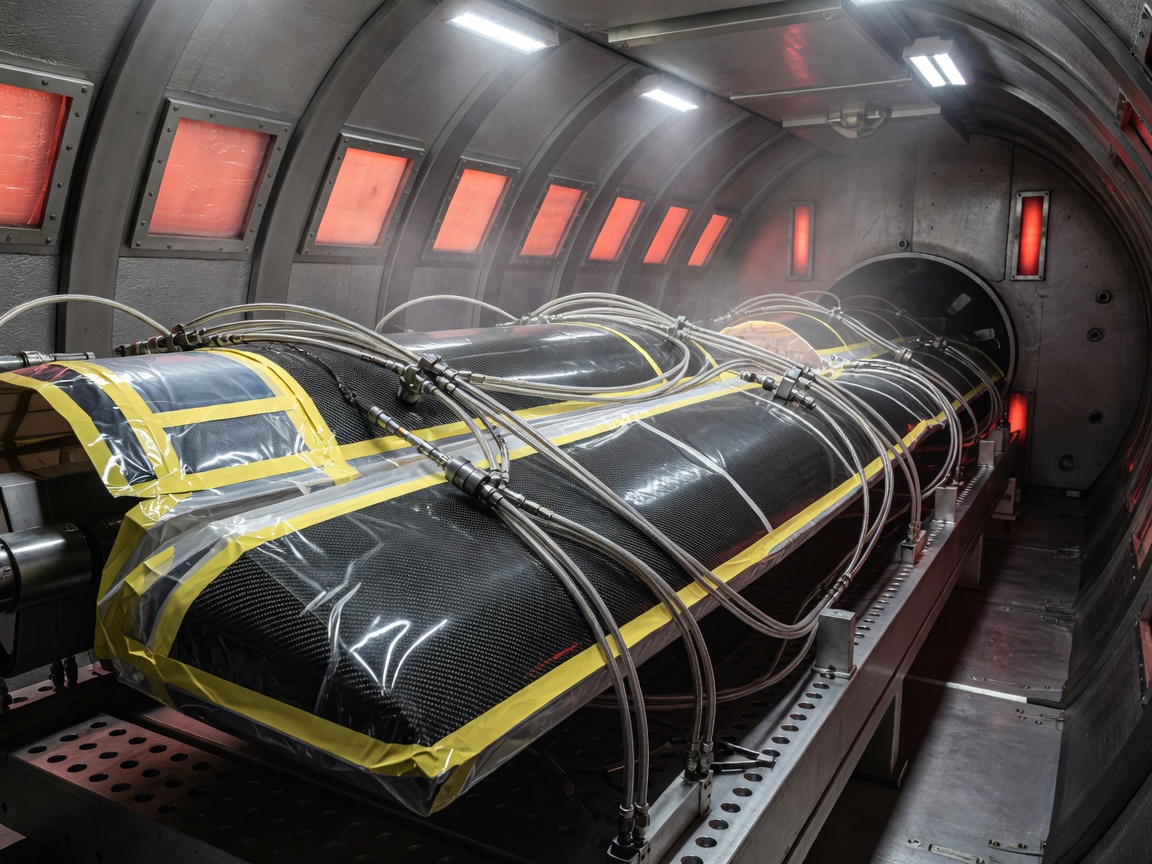
"By co-curing the Venturi suction channels into the load-bearing T1100 carbon floor, we achieve 65,000 Nm/degree torsional stiffness while keeping the aerodynamic boundary layer perfectly flat."
1,000Hz Active Flap Actuation
To balance suction forces during hard braking and roll initiation, high-frequency linear actuators adjust the rear diffuser strakes up to 1,000 times per second based on active chassis height sensors. This maintains constant downforce distribution across all four contact patches.
Computational Research & Standards
Explore international fluid dynamics standards and aerodynamic research via SAE Aerodynamic Standards Portal.